God and our forefathers
The question is closer than it sounds
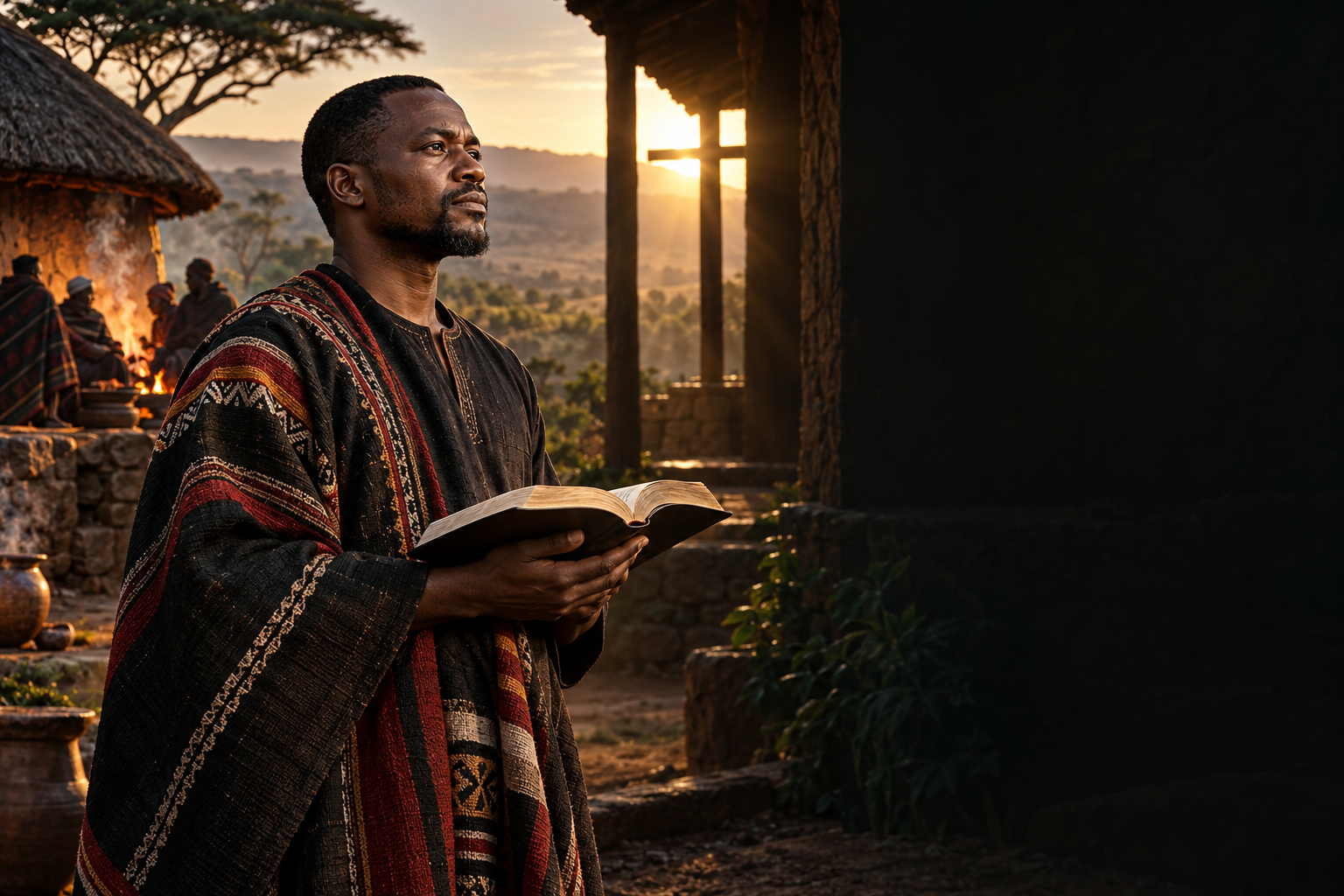
For many Africans, the question is not simply whether Christianity or African spirituality has the better argument. It reaches into family, identity and belonging. If our parents and grandparents poured libations, spoke to the departed or sought guidance through ancestral rituals, does turning from those practices mean turning against the people who gave us life?
That emotional weight deserves honesty. The gospel never asks us to despise our family or pretend that Africa had no wisdom before modern missionaries arrived. But love for our forefathers cannot decide who God is or how he may be approached. Those questions belong to God himself, who has spoken and made himself known.
The choice is not between loving our family and loving God; it is between receiving God's revelation and creating access to him on our own terms.
God and our forefathers
Honour is not the same as invocation
Scripture commands children to honour father and mother. Gratitude, respectful remembrance, care for elders and the truthful preservation of family history are good. Christians need not become people without roots. We may name those who came before us, thank God for their sacrifices and learn from both their courage and their failures.
But remembrance becomes something else when the dead are addressed, petitioned, consulted, feared or treated as guardians who carry requests into the spiritual world. Honour concerns the obligations of the living. Invocation assigns the departed a spiritual office that God has not given them. The difference matters even when a ritual is described as culture rather than worship.
We can honour our forefathers without turning them into mediators, protectors or spiritual authorities.
God and our forefathers
The God of Abraham identifies himself
When God met Moses at the burning bush, he called himself the God of Abraham, Isaac and Jacob. This was not an invitation to worship Abraham. It was God's declaration that he had acted in history, made promises and remained faithful to his covenant. Abraham was a recipient of revelation, not a rival source of it.
The God of Scripture is not one territorial deity among many, nor the private possession of Europeans or Israelites. He is the Creator of heaven and earth, the Judge of all nations and the Lord who called Abraham so that all the families of the earth would be blessed. His identity is received from his word; it is not reconstructed from the religious expectations of any culture.
Abraham points us to the God who called him; he does not stand between us and that God.
God and our forefathers
Why Scripture forbids consulting the dead
Deuteronomy 18 places divination, mediumship and inquiry of the dead outside faithful worship. Isaiah asks the decisive question: should not a people inquire of their God? Why consult the dead on behalf of the living? The prohibition is not an insult aimed at African culture. Israel was warned against comparable practices in its own religious environment.
Scripture does not encourage us to test whether a spiritual voice really belongs to a deceased relative. It directs us away from the practice itself. Spirits can deceive, human interpreters can manipulate fear and grief can make certainty feel possible where it is not. God's people are given a safer and clearer place to seek truth: the word of the living God.
The biblical answer to spiritual uncertainty is not a better technique for reaching the dead, but confident access to the living God.
God and our forefathers
Christ is not one mediator among many
The deepest issue is not whether ancestors may be helpful. It is whether Jesus Christ is sufficient. The New Testament names one mediator between God and humanity: the man Christ Jesus. He does not merely add Christian protection to an existing spiritual system. By his death and resurrection, he reconciles sinners to God and brings them near.
A mediator must be able to represent us before God and overcome the guilt that separates us from him. Our forefathers, however respected, were human beings who also needed grace. Christ alone is the sinless Son who offered himself, rose from death and lives to intercede for his people. Adding other mediators does not honour him; it obscures the completeness of his work.
If Christ has truly brought us to the Father, no departed relative is needed to complete the journey.
God and our forefathers
Fear often keeps the system alive
Many people continue ancestral rituals less from theological conviction than from fear. What if refusal brings sickness, unemployment, infertility, conflict or death? When every misfortune is interpreted as ancestral displeasure, ritual obligation can expand without limit. The family may never know whether enough has been done.
The gospel addresses that fear with the lordship of Christ. Believers are not promised a life without suffering, but they are promised that neither death nor life, angels nor rulers, nor any power can separate them from God's love in Christ. The Christian does not need to bargain with unseen forces for permission to live. We belong to the risen Lord.
Christian freedom is not the absence of hardship; it is freedom from treating fear as our spiritual master.
God and our forefathers
The gospel both receives and confronts culture
Every culture carries signs of God's common grace: language, kinship, hospitality, music, proverbs, courage and concern for community. Every culture also contains beliefs and practices that must be tested. Europe is not the standard by which Africa is judged. Scripture judges Africa, Europe and every other society with the same authority.
Following Christ therefore involves neither cultural self-hatred nor uncritical cultural loyalty. Christians may retain what is good, reform what is disordered and refuse what contradicts the worship of God. That work is sometimes costly, especially when a ritual is tied to family unity. Yet biblical faithfulness can be expressed with patience, humility and visible love rather than mockery.
The gospel does not make Africans less African; it teaches every culture to bow before the same Lord.
God and our forefathers
Remember the dead, worship the living God
Christians can cultivate practices of faithful memory. Tell the truth about those who came before us. Preserve names and stories. Visit and care for elderly relatives. Give thanks for courage and sacrifice. Confess inherited sins where necessary. Comfort the grieving and affirm the dignity of the body at funerals. None of this requires prayer to the dead.
Our final hope is not that family bonds can secure our place in the spiritual world. It is that Jesus Christ has conquered death. In him, believers are adopted into God's household and await the resurrection. We honour our forefathers most truthfully when we refuse to make them what no human being can be, and when we entrust both the living and the dead to the justice and mercy of God.
Keep the memory of your forefathers with gratitude, but give your worship, trust and prayer to God alone.
Sources and further reading
- Genesis 12:1–3; Exodus 3:1–15 — the God who called Abraham and revealed his covenant name.
- Deuteronomy 5:16; 18:9–14 — honour for parents and the prohibition of consulting the dead.
- Isaiah 8:19–20 — “Should not a people inquire of their God?”
- Romans 8:31–39 — security in the love of God in Christ.
- 1 Timothy 2:5–6; Hebrews 7:23–27 — Christ, the one sufficient mediator.
- Kwame Bediako, Christianity in Africa: The Renewal of a Non-Western Religion.