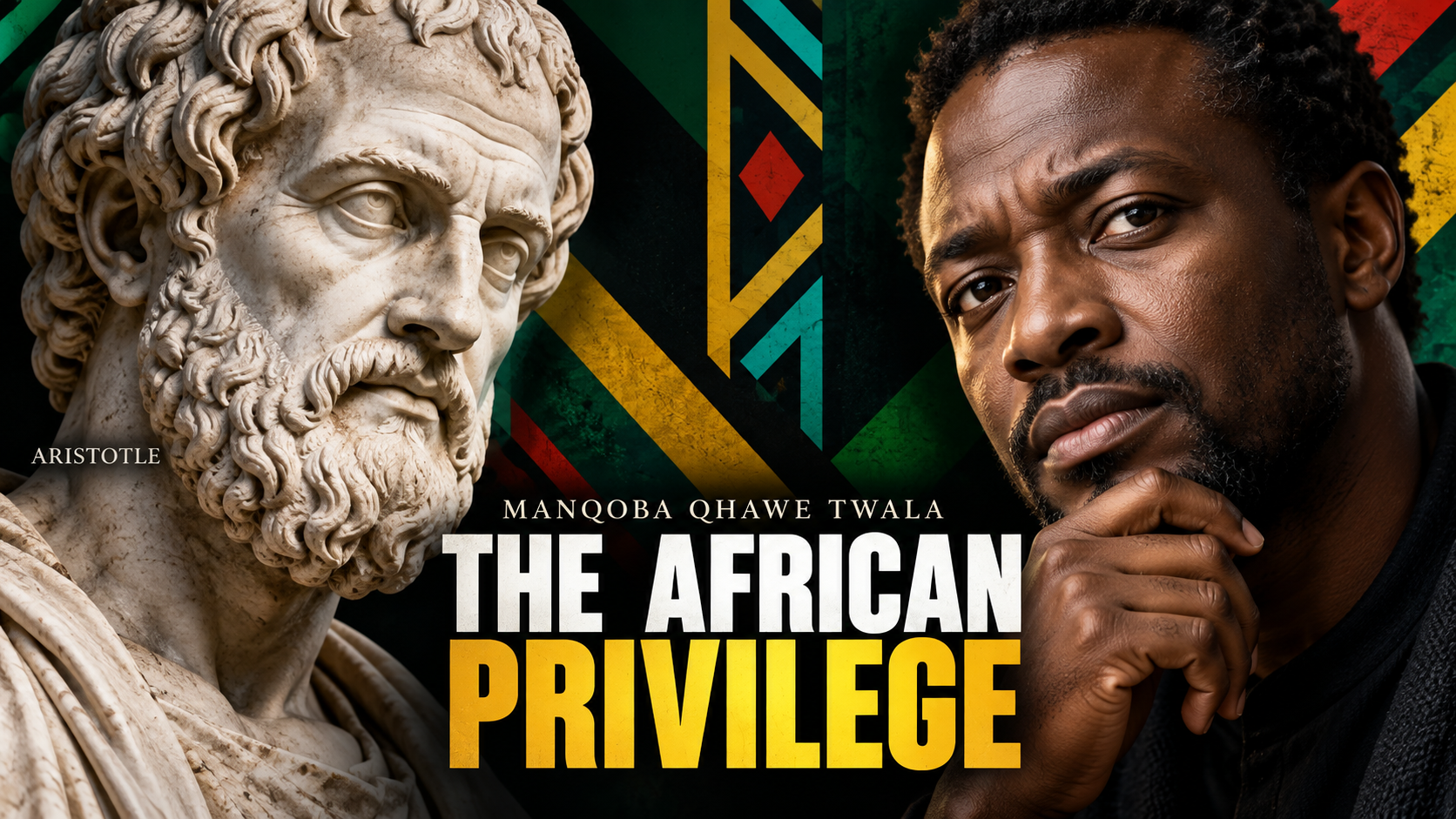
The God Africans Saw
African cultures are theocentric in nature. All that Africans are flows from what they have believed about God. Their belief in God is highly influenced by the cosmos. They conceptualized God as the Supreme Being mainly from creation. There are quite a number of things that played a part in their conceptualization, but their major point of departure was creation.
The universe’s vastness and beauty influenced their contemplation. Having been alive inside such a great world, there should be the Great-Great One, “uNkulunkulu.” This is the work of Providence, as God’s witness, creation (Psalm 19:1–7), testifies of Him.
The witness God left of Himself could not help but play itself out as they looked at the skies above with their shining stars. For them, God was either there, where the stars are, or higher than the stars. It was the simple things that spoke volumes to them. The rain that falls from above should not be from anyone other than Him who dwells on high. Because He dwells high, to them it was fitting that He be called “Modimo,” meaning “the One who is high above.”
In this way, creation did not merely surround them; it became the means through which they contemplated the One who stood behind it. Their experience of the world became an avenue through which they perceived their own finitude and were drawn to the greatness of the Supreme Being.
The African Privilege
More often than not, whenever I think of Africans’ intuition and inclination towards general revelation, I am pushed to realise what I would call the African Privilege.
I say this with great humility, being very aware that Africans never attained the true knowledge of God as it is revealed in Scripture and the Gospel of the Lord Jesus Christ, unless it was through the preaching of God’s Word. Rather, they are the closest I have seen.
Their contemplation of creation seems to have brought them remarkably close to a conception of God that acknowledged His greatness, transcendence, and involvement with the world.
This becomes clearer when African conceptions of God are placed alongside the conceptions of other ancient thinkers.
I have read ancient Greek philosophers, and my jaw has dropped multiple times at the excellence of their intelligence. The questions they probed and the answers they gave after intense thinking have shaped their world and ours. They have influenced brilliant scholars and theologians like Augustine and Thomas Aquinas. Their thinking, even though it was a thorn to the Church, was also a great tool.
Yet, as impressive as their philosophical reasoning was, I find an important difference when their concept of God is compared with African conceptualizations of God.
Aristotle and the Unmoved Mover
Take, for example, the great philosopher Aristotle and his concept of the Unmoved Mover. It points to a reality beyond the changing world that ultimately explains its motion and order. Yet, as R. C. Sproul indicates in The Consequences of Ideas (2000, pp. 49–50), Aristotle's conception of God differs significantly from the personal God revealed in Scripture.
There is brilliant reasoning here: everything that is moved or changed is moved by something else. If every mover required another mover before it, we would have an infinite regress. Therefore, it was Aristotle’s reasoning that there must be an ultimate first cause of motion that itself is not moved, thus the name “the Unmoved Mover” (Sproul, R. C., 2000, pp. 49–50).
Aristotle’s conception of God was pure actuality, which explains the cause of change and motion. For Aristotle, the Unmoved Mover is the ultimate explanation behind the order and movement of reality. He did not necessarily conceive of God as the creator of the cosmos, because the cosmos was eternal in his thought. The Unmoved Mover, then, is the explanation for why the eternal cosmos is constantly changing and moving.
Aristotle’s reasoning, therefore, is significant because it shows how far human beings can reason from the movement and order of creation toward the existence of a supreme reality.
Yet it is precisely here that I find the African conceptualization striking.
This is brilliant and intellectual, and I love it because it crushes atheism to its core, even though it is written by a non-Christian.
But while Aristotle’s reasoning points beyond the world to an ultimate explanation for its movement, African conceptualization, as I understand it, went further in recognizing the Supreme Being as more than merely an abstract explanation of reality.
Transcendence and Immanence
Even though their God was transcendent, as Aristotle’s Unmoved Mover was, He was not simply an abstract philosophical principle. Their conception did not stop with God’s transcendence; it also wrestled with His relationship to the world.
They struggled with the concept of God’s immanence, but they had touches of it. They believed that the universe belonged to the Supreme Being and that He is the One who sustains it.
This understanding becomes even more significant when we consider the relationship between knowledge of God and knowledge of ourselves.
As Calvin indicated in the opening lines of his Institutes, “the sum of true wisdom is knowledge of God and knowledge of self” (Calvin, J., 1960).
Their awareness of themselves as finite and dependent beings corresponded with their awareness of the Supreme Being as infinite and greater than themselves.
They simply knew how to see their finitude and be drawn to God’s infinitude.
Knowledge of themselves as limited and dependent pushed them to see their need for this Supreme Being. This is where their contemplation of God became more than an abstract philosophical exercise. They did not deal merely with the abstractness of life; rather, what they could perceive or experience pushed them into deep contemplation about the Supreme Being and how to get hold of Him.
They knew that God was very involved in their lives and in the world, but could not comprehend the idea that they could personally relate with Him, given that He is far and great.
Thus, the very awareness that God was present and involved, while at the same time being far greater than them, created a tension:
If God is truly there, and if human beings are dependent upon Him, then how can finite human beings reach Him?
“How Do I Then Connect With Him?”
This is what I call the African Privilege.
The immense visibility of God’s invisibility was like the brilliance of the sun. It was, to me, the birth of African religions.
The awareness of God was already there; the question was how that awareness could become a relationship with Him.
Because if God is truly there, very involved, and His world is here; I am on this side, very much in need of Him in my finitude—the question starts:
“How do I then connect with Him?”
This question is important because African Traditional Religions are not monolithic. We have a variety of religions and ways in which they are expressed across different countries, peoples, and tribes.
Taking a common practice among cultures that are closely related, such as the Zulu and Xhosa, we can see how a common goal can be expressed and practised differently.
Both cultures have traditions concerning the transition from boyhood to manhood, but the ways in which this transition has been understood and practised have differed.
Among the Xhosa, ulwaluko traditionally involves young men, usually in their late teens, going into an initiation lodge for several weeks. A traditional surgeon (ingcibi) circumcises them, and they live in seclusion as abakhwetha, covered in white clay and guided by a caretaker (ikhankatha). They emerge in a public ceremony and are recognized as amadoda (men). Much of the process is kept secret from outsiders and from women and uninitiated boys. An uncircumcised man is often not considered a full man.
For Zulu people, by contrast, manhood traditionally came through service, marriage, and building a homestead, with no seclusion or comparable secret rite. Even so, there are accounts that circumcision may have been practised traditionally but was discontinued under Shaka.
The point here is that they can have a common goal while expressing and practising that goal differently.
This is also true when speaking about religion.
The Question of Salvation
African Traditional Religions cannot be reduced to one uniform system, yet many African peoples have historically affirmed some conception of a Supreme Being associated with creation and the sustaining of the universe. Their expressions of this belief differ significantly.
Nevertheless, there is a common theological question that can be observed beneath these different expressions:
How can I connect with God?
In theological terms, we might describe this as the question of salvation.
Everyone in the whole universe has asked this question, whether directly after hearing the message of the Gospel, as in Acts 2:37, or indirectly after seeing their finitude and experiencing a great longing to be fulfilled—to live a full and complete life that never ends.
Plato in antiquity asked himself how he could return to the realm of the Soul (Gaarder, J., Sophie’s World, 1995, pp. 69–70). It is a big question, and everyone has it deeply lying beneath their heart.
These are the questions that Africans were asking themselves:
How can we connect with God?
They came to several conclusions. Others did not have the ancestors-as-mediators phenomenon. The Gikuyu of Kenya have always believed in the one Almighty God, the creator and ruler of all men and all things and there is not evidence found on them worshiping an idol or any other natural phenomena (Kunhiyop, S., W., 2012). This is a great example of the privilege I am speaking about. But still resides the question of Salvation that once confronted Jews who knew and worshipped the only true God. How can we be saved?
This is why Jesus is indispensable.
Jesus Is Indispensable
Jesus is the full self-revelation of God that is salvific. African conceptions of God through natural revelation are special, and I believe they are privileged. But to know Him personally is through His Son, who “is the radiance of God’s glory and the exact representation of his being” (Hebrews 1:3).
The awareness of God was there. Creation was speaking. The heavens were declaring. Human beings were seeing their finitude. They were contemplating the Supreme Being. But general revelation could not bring them into the saving knowledge of God. They needed something more. They needed God to reveal Himself. And God has revealed Himself in His Son.
Fully African in Christ
My goal with this is that Africans may see how precious it is to be an African, but how greatly limited it is to be an African outside of Christ.
There is a privilege in being African. There is a privilege in inheriting cultures that have wrestled deeply with the question of God. There is a privilege in looking at the heavens and seeing more than mere matter. There is a privilege in contemplating creation and being pushed towards the Creator.
But there is also a limitation. General revelation is not enough. A conception of God is not the same as knowing God. Knowing that He is there is not the same as knowing Him personally. And this is why Christ is indispensable. In Him, you become fully African, and you live a life that is complete and full.
The question that has stood beneath the African contemplation of God remains: “How do I then connect with Him?” And the answer is not found in creation alone. It is found in Christ.