Not an Empty Religious Room
When Christianity entered African societies, it did not enter an empty religious room. It encountered peoples who already prayed, sacrificed, feared spiritual powers, sought mediation and understood themselves as belonging to communities that included both the living and the departed.
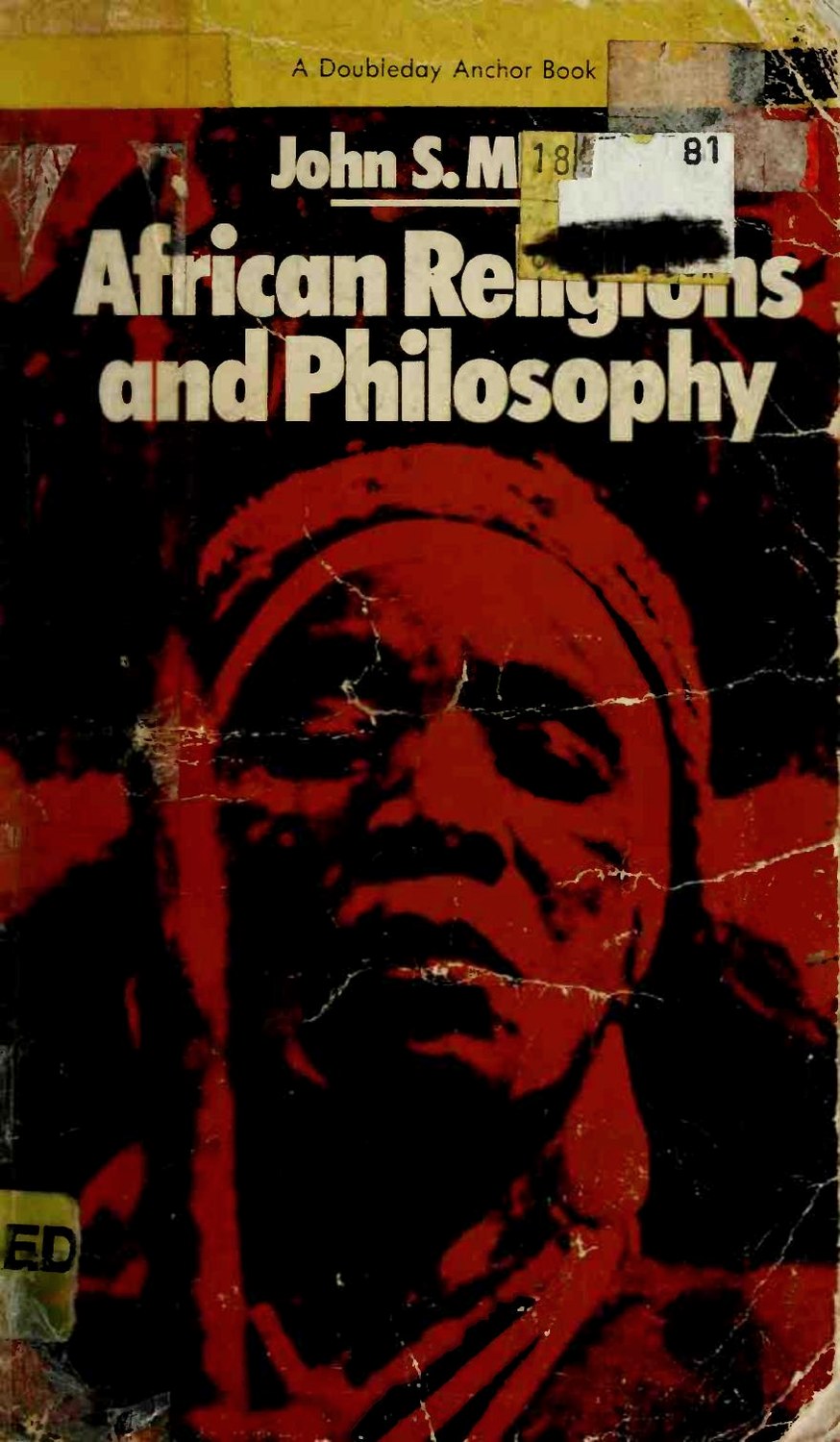
John S. Mbiti’s African Religions and Philosophy remains one of the most influential attempts to describe that religious world. Its chapters move from God and creation to worship, spirits, the living-dead, kinship, birth, marriage, death, religious specialists, mystical power, evil and finally Christianity. Mbiti is not cataloguing a few disconnected customs. He is presenting a world in which the sacred and the ordinary are woven together.
We must begin, however, with a caution that strengthens rather than weakens Mbiti’s project. There is no single, uniform “African religion.” Jacob K. Olupona writes that “African religions are as diverse as the African continent itself.” The religious worlds of the Akan, Gikuyu, Yoruba, Dinka, Basotho and amaXhosa overlap in important ways, but they are not interchangeable. To speak broadly is sometimes necessary; to treat every African people as though they believe exactly the same thing is careless.
Mbiti nevertheless identifies recurring questions that many African traditions ask: How may human beings approach a transcendent God? What restores a community after guilt or misfortune? How are the living related to the departed? Where does spiritual danger come from? Who can mediate, cleanse, heal and protect? These questions create an unavoidable missionary problem: when the gospel enters such a world, what does it affirm, what does it redirect, and what must it overthrow?
A Christianity “Locked Up Six Days a Week”
Mbiti’s criticism of mission Christianity is among the most penetrating parts of his book. Traditional religion accompanies people into sickness, death, dreams, barrenness, family conflict, drought and fear. Conversion, he argues, must therefore reach a person’s language, thought patterns, fears, relationships, attitudes and philosophy of life—not merely Sunday worship.
Later he describes mission Christianity as a religion “locked up six days a week” (p. 305). Africans who have never known a religious vacuum naturally find such a faith inadequate. When crisis comes, a person may attend church publicly but privately return to a diviner, medium or family ritual because those practices appear to address the world in which the person actually lives.
That is an important indictment. Missionaries sometimes confused Christianity with European culture. Conversion could appear to demand European names, music, dress, architecture and social customs. The African convert was not simply called to follow Christ but made to feel that Christian maturity required cultural relocation.
Samuel Waje Kunhiyop offers a better path. African Christian theology need not be a surrender to syncretism. As he memorably says, “African is no more a synonym for liberal than American is a synonym for evangelical.” The aim is to understand Scripture faithfully and apply it to African life. That means the church must speak directly about ancestors, spiritual power, sacrifice, misfortune and death—while allowing Scripture to judge every culture, African and Western alike.
What Do We Mean by “Fulfilment”?
The word fulfilment can hide two very different claims. The first is that Christ answers the deepest questions and longings found in African religious life. The second is that African traditional religions are God-given paths of salvation that Jesus simply completes. The first claim can be defended biblically. The second cannot.
The Old Testament contains sacrifices, priests, covenants, kings and prophets that find their fulfilment in Christ because God established them within the history of redemption. They were divinely given shadows pointing forward to him. African sacrifices and ancestral mediators do not occupy that covenantal place. They were not appointed through Moses as promises of the Messiah.
The Old Testament promises Christ.
African religion demonstrates why humanity needs him.
African religions arise within God’s world and among people made in God’s image. They may retain fragments of truth available through creation, conscience, memory and providence. Yet Romans 1 also says that human beings suppress and exchange God’s truth. General revelation makes true knowledge possible, but it does not leave any culture religiously innocent. Christ does not arrive to rubber-stamp inherited worship; he reveals the Father and commands every people to repent.
The Longing for a Mediator
Mbiti observes that many African peoples regard God as both near and exalted. Some pray to God directly; others believe ordinary people should approach through persons who stand nearer to the divine realm. Mbiti traces this partly to African social structures: as a subject approaches a king through an official, so a worshipper may approach God through priests, elders, kings, diviners, spirits or the living-dead.
Among the Basotho, Mbiti describes a chain in which a request passes through departed family members until it reaches one considered able to approach God. He views such intermediaries as bridges rather than barriers and concludes that the end matters more than the means (pp. 88–92).
Here the bridge goes too far. The longing for mediation is a real point of contact with the gospel. Scripture agrees that sinful human beings cannot casually enter the presence of a holy God. The priesthood, sacrifices and tabernacle all testify that access requires God-appointed mediation.
But Jesus is not the strongest member of an existing hierarchy. He replaces every rival claim: “There is one God, and there is one mediator between God and men, the man Christ Jesus” (1 Tim. 2:5). He does not merely assist us along a chain leading to God; through his flesh he opens the new and living way (Heb. 10:19–22). Christ answers the African longing for a mediator by confronting and displacing the inherited system of mediators.
The Search for an Acceptable Sacrifice
Mbiti calls sacrifices and offerings some of the most common acts of African worship. They may express thanksgiving and communion or seek healing, protection, propitiation and the restoration of order after wrongdoing or misfortune. Among the Abaluyia they accompanied births, initiations, weddings, funerals and harvests. Among the Gikuyu and Akamba they appeared in epidemics and droughts. Yoruba offerings could seek health, children and protection, while Dinka animal sacrifice linked the human and divine realms (pp. 75–79).
Olupona helps explain why these practices remain compelling. Many African traditions seek what he calls a “this-worldly salvation”: health, fertility, longevity and flourishing in a world where ancestors, spirits and gods are believed to influence daily affairs. The ritual is not an abstract doctrine; it promises help with tomorrow’s danger.
These practices expose a profound intuition: spiritual disorder cannot be repaired through explanation alone. Guilt, estrangement and danger appear to demand cleansing, reconciliation and cost. This gives Christian proclamation meaningful language. The gospel announces sacrifice, blood, substitution and restored fellowship with God.
Yet Christ is not merely a superior offering within the same system. His death exposes the inadequacy of every human attempt to purchase spiritual peace. He entered the holy places by his own blood and secured eternal redemption; he offered himself once for all (Heb. 9:12; 10:10–14). Traditional sacrifice says, “Something must be offered.” The gospel agrees—and then announces, “God himself has provided the offering.” Christ fulfils the longing expressed in sacrifice, but his finished work terminates every rival sacrifice for spiritual reconciliation.
The Living, the Dead and the “Living-Dead”
One of Mbiti’s best-known contributions is his description of the recently departed as the “living-dead.” These are family members who have died physically but remain alive in the memory and religious world of the community. Because they recently belonged to the human family but have entered the realm of the departed, Mbiti describes them as speaking the language of both worlds. They may convey requests to God and responses to the living.
This category notices something modern Western individualism often misses. Death does not make a person’s history meaningless. We owe gratitude to those who came before us, and our identity is received through families and communities. Christianity also rejects the secular claim that death is extinction. The dead remain personally existent before God, and Christians confess resurrection, judgment and the gathering of God’s people in Christ.
Nevertheless, Scripture does not permit remembrance to become invocation. There is a difference between honouring our forebears and asking them to carry requests to God. God forbids consulting the dead for knowledge or spiritual assistance (Deut. 18:10–12; Isa. 8:19). The rich man in Jesus’ parable is not allowed to return to warn his brothers; they have Moses and the Prophets and must hear God’s written word (Luke 16:27–31).
Christ fulfils the longing for continuity beyond death, but relocates that continuity in himself. The communion of God’s people across death is not maintained through ritual traffic with ancestors. It is held by the risen Lord, who died and lived again “that he might be Lord both of the dead and of the living” (Rom. 14:9).
Taking the Spiritual World Seriously
African traditional religion refuses to reduce reality to what can be measured. Olupona describes a porous religious universe in which visible and invisible agents constantly interact. Christianity should not answer this world with Western secularism. The Bible speaks plainly about angels, demons, providence, prayer, judgment and rulers and authorities in the unseen realm. The African is right to reject a universe in which matter is all that exists.
But acknowledging spiritual reality does not validate every way of accessing it. Mbiti describes diviners believed to receive revelations, spirits communicating through possession and dreams, and specialists claiming power to diagnose hidden causes of suffering. God forbids divination, necromancy and mediumship precisely because the spiritual realm is real. These are not harmless cultural techniques; they seek knowledge and power apart from the means God has appointed.
Kunhiyop gives the necessary theological order. Experience raises the questions theology must answer, and African experience must not be ignored. Yet Scripture has the authoritative, judging role; every experience and tradition must yield to God’s word. The church must therefore take African fears seriously without baptising every African explanation of those fears.
Colossians speaks powerfully here. Christ is not one power among many. All things—including thrones, dominions, rulers and authorities—were created through him and for him (Col. 1:16). At the cross he disarmed the rulers and authorities (Col. 2:15). Christians therefore need neither a secularised gospel that denies spiritual powers nor a syncretistic gospel that keeps believers dependent on them.
Christ Fulfils the Questions—Not Every Inherited Answer
So, does Christ fulfil African religion? We can now answer carefully.
He fulfils the longing for mediation, but not by joining the ancestors in carrying our prayers. He is the only mediator. He fulfils the longing for sacrifice, but not by becoming one more offering in an endless cycle. His once-for-all death brings that cycle to an end. He fulfils the longing for life beyond death, but forbids the living to seek help from the departed. He fulfils the longing for protection, but transfers our allegiance from rituals of spiritual management to the crucified and risen Lord.
He also fulfils what African communal life perceives truly: human beings are not isolated selves. Salvation joins us to a body, gives us fathers and mothers in the faith, and creates a household drawn from every people. Yet the church is a new humanity under Christ, not merely the old kinship system with Christian vocabulary added.
The gospel can therefore affirm an African question while rejecting an African answer. It affirms the reality of God, the spiritual character of creation, communal responsibility, the seriousness of guilt and humanity’s need for mediation. It corrects distorted concepts of God, fear-driven accounts of suffering and confusion between honouring and invoking the dead. It replaces ancestral mediation, divination, sacrifices for reconciliation and every rival source of saving revelation.
Redeemed Within Our World
Mbiti was right that Christianity must redeem Africans within our world rather than turn us into displaced Europeans. If the church refuses to speak about ancestors, witchcraft, spiritual power, sacrifice, misfortune and death, traditional religion will continue answering the questions the church avoids.
But entering the African religious world is not the same as accepting its spiritual architecture. Contextualisation is not decorating inherited religion with Christian words. It is bringing the whole of African life under the lordship of Christ, allowing Scripture to expose both the idolatries imposed by Western culture and those received from our ancestors.
Jesus does not arrive as one more ancestor, a stronger diviner, a higher spirit or the final member of a long chain of mediators. He comes as Lord. He answers African religious longings by revealing the true God, bearing guilt, defeating hostile powers, ending rival sacrifices and claiming authority over the living and the dead.
Christ does not merely cross the bridges African religion has built towards God. He confronts those bridges and declares himself the only way to the Father.
Sources and further reading
- John S. Mbiti, African Religions and Philosophy, 2nd ed. (Heinemann, 1969/1990), especially pp. 3–4, 42–43, 75–79, 88–92 and 299–310.
- Jacob K. Olupona, African Religions: A Very Short Introduction (Oxford University Press, 2014), especially pp. 1–4 and 20–37.
- Samuel Waje Kunhiyop, African Christian Theology (HippoBooks/Zondervan, 2012), especially pp. 1–5, 19–21 and the chapters on Christ, salvation and spiritual powers.
- Holy Scripture quotations are from the English Standard Version.